


Climate Change
President Barack Obama
“No single event makes a trend. But the fact is, the 12 hottest years on record have all come in the last 15. Heat waves, droughts, wildfires and floods, all are now more frequent and more intense” — President Barack Obama
Livescience, 2013


2015 hottest on record, 1°C over pre-industrial levels
“Global temperatures are set to rise more than one degree above pre-industrial levels according to the UK’s Met Office. Figures from January to September this year are already 1.02°C above the average between 1850 and 1900. If temperatures remain as predicted, 2015 will be the first year to breach this key threshold. The world would then be half way towards 2°C, the gateway to dangerous warming”
BBC, 2015

February 2016 smashes global temperature records
“February smashed a century of global temperature records by a “stunning” margin, according to data released by NASA. The unprecedented leap led scientists, usually wary of highlighting a single month’s temperature, to label the new record a “shocker” and warn of a “climate emergency”. The NASA data shows the average global surface temperature in February was 1.35°C warmer than the average temperature for the month between 1951-1980, a far bigger margin than ever seen before. The previous record, set just one month earlier in January, was 1.15°C above the long-term average for that month”
The Guardian, 2016
PROJECTED CHANGES IN GLOBAL TEMPERATURE

“Unless the world takes bold action now, a disastrously warming planet threatens to put prosperity out of reach of millions and roll back decades of development”
World Bank, 2013

Climate change is a threat to national security – the pentagon
“The Pentagon declared climate change an immediate risk to national security and outlining how it intends to protect bases, prepare for humanitarian disasters and plan for global conflicts. Defence Secretary Chuck Hagel unveiled the plan at the Conference of Defence Ministers of the Americas in Peru, where he said defence leaders “must be part of this global discussion” on climate change. Militaries, he added, “must be clear-eyed about the security threats presented by climate change, and we must be pro-active in addressing them”
World Bank, 2013

Climate change is changing the world
“Warming of the climate system is unequivocal, as is now evident from observations of increases in global average air and ocean temperatures, widespread melting of snow and ice and rising global average sea level”
Intergovernmental Panel
on Climate Change, 2007

Greenland has lost 9 trillion tons of ice since 1900, and the rate of loss has doubled between 2003 and 2010
“A massive new study has calculated just how much ice the Greenland ice sheet has lost since the year 1900. The number is [an] astounding: 9,103 gigatons (a gigaton is a billion metric tons). That’s over 9 trillion tons in total. And moreover, the rate of loss has been increasing, with a doubling of annual loss in the period 2003 to 2010 compared with what it was throughout the 20th century”
Washington Post, 2015

Alaska loses 75 billion tons of ice a year
“Scientists with the University of Alaska at Fairbanks and several other institutions report a staggering finding: Glaciers of the United States’ largest, and only Arctic, state, Alaska, have lost 75 gigatons (a gigaton is a billion metric tons) of ice per year from 1994 through 2013”
Washington Post, 2015

The great pyramid in giza weighs 5.9 million tonnes
“The mass of the [great Egyptian] pyramid is estimated at 5.9 million tonnes”
Wikipedia
Therefore the scale of Greenland’s ice loss is equal in weight to 1,525,423 great pyramids of Giza
Greenhouse Gases
Learn how atmospheric GHG concentrations are breaking records.


Extreme Weather
Learn how the world has only a few years to stop catastrophic warming.
Humans causing extreme climate change
“We know without any doubt that our climate is changing and our weather is becoming more extreme due to human activities”
–Secretary-General Michel Jarraud
United Nations
World Meteorological Organization, 2014


97% of scientists say humans cause climate change
“97% of climate scientists agree that climate-warming trends over the past century are very likely due to human activities, and most of the leading scientific organizations worldwide have issued public statements endorsing this position”
NASA, 2013
Agricultural Productivity Threatened

2029
By 2029 climate change will affect 1 in 10
“Within the next 20 years, 1 in 10 of the world’s present population could be directly and seriously affected by climate change”
Time Magazine, 2009
2033
By 2033 widespread food shortages, unprecedented heat waves and cyclones, will be commonplace
“If the world warms by 2°C, warming, which may be reached in 20 to 30 years, will cause widespread food shortages, unprecedented heat waves, and more intense cyclones”
World Bank, 2013


2036
“The world will cross a threshold into environmental ruin by 2036”
Scientific American, 2014
2050
By 2050 GHG emissions will increase by 80%
“By 2050 global agricultural greenhouse gas emissions are projected to increase by 80%”
Nature Journal, 2014


2050
Droughts to affect 25% of the world’s cereal regions by 2050
“Climate change will increasingly take effect by 2050 and may cause large portions of the Himalayan glaciers to melt, disturb monsoon patterns, and result in increased floods and seasonal drought on irrigated croplands in Asia, which accounts for 25% of the world cereal production”
GRID Arendal / United Nations Environment Programme, 2009
2050
150 MIllion climate refugees by 2050
“Global warming could create 150 million climate refugees by 2050”
Institute for Environmental Management and Assessment, 2009


2050
Undernourished to increase by 25% to 90% by 2050
“With warming of 1.2°C to 1.9°C by 2050, the proportion of the population undernourished is projected to increase by 25% to 90%”
World Bank, 2013
2100
Warming is an unprecedented 20x faster
“Models predict that Earth will warm between 2°C and 6°C in the next century. When global warming has happened at various times in the past two million years, it has taken the planet about 5,000 years to warm 5°C. The predicted rate of warming for the next century is at least 20 times faster. This rate of change is extremely unusual”
NASA, 2012


2100
66% chance of 4.2°C to 6.5°C warming by 2100
“There is a 66% likelihood that emissions will lead to a warming of 4.2°C to 6.5°C, and a remaining 33% chance that warming would be either lower than 4.2°C or higher than 6.5°C by 2100”
World Bank, 2013
2100
We are on course for 3.5°C to 4°C warming by 2100
“The current United Nations Framework Convention on Climate Change emission pledges and commitments would most likely result in 3.5°C to 4°C warming by the end of this century”
World Bank, 2012

2100
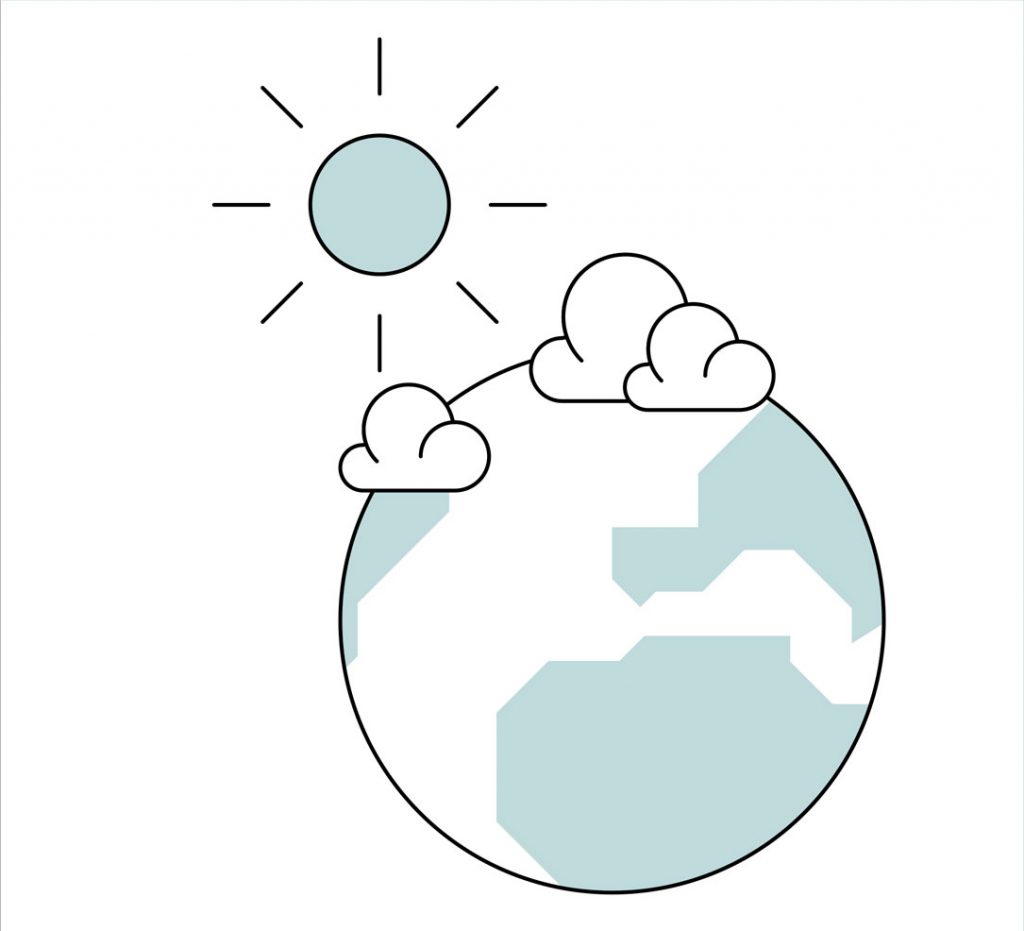
Multi-model averages and assessed ranges for surface warming
Intergovernmental Panel on Climate Change, 2007

Keep warming below 2°C to save the planet
“We have the knowledge and we have the tools for action to try to keep temperature increases within 2°C to give our planet
a chance and to give our children and grandchildren a future. Pleading ignorance can no longer be an excuse for not acting” — Secretary-General Michel Jarraud
United Nations World Meteorological Organization, 2014

Reducing meat consumption firmly off the table at paris climate conference
“As of 21 October, commitments to reducing emissions from the livestock sector appear in only 21 of the 120 national plans submitted in advance of the Paris climate conference. Reducing meat consumption appears in none”
BBC, 2015

Healthy diet needed to meet 2°C target
“Global adoption of a healthy diet would see a yearly emissions saving of 6 GtCO2 e in 2050, almost all of which would result from reduced consumption of meat and dairy produce. As a consequence, the predicted emissions gap between proposed mitigation measures and the two-degree scenario could be reduced by a quarter”
National Geographic, 2015

Over-consumption of meat will stop any chance of preventing 2°C warming
“Without concerted action to address over-consumption of meat, it will be near impossible to prevent global warming from passing the danger level of 2°C”
BBC, 2015

Replant forests to absorb carbon
“A global food transition to less meat, or even a complete switch to plant-based protein food would have a dramatic effect on land use. Up to 2,700 mega hectares of pasture and 100 mega hectares of cropland could be abandoned, resulting in a large carbon uptake from re-growing vegetation”
Netherlands Environmental
Assessment Agency, 2009

Converting grazing land into forest is the cheapest CO2 mitigation option
“A global transition to a low meat-diet as recommended for health reasons would reduce the mitigation costs to achieve a 450 ppm CO2-eq. stabilisation target by about 50% in 2050”
Netherlands Environmental
Assessment Agency, 2009

Trees versus geo-engineering
“Growing trees is less expensive and risky than carbon capture and storage or geo-engineering”
Netherlands Environmental
Assessment Agency, 2009

Reduce warming impacts with plant based diet
“A substantial reduction in climate change impacts would only be possible with a substantial worldwide diet change, away from animal products”
United nations Environment Programme, 2010

Dropping global demand for meat and dairy is central to achieving climate goals, preventing 2°C warming is highly unlikely without this
“Shifting global demand for meat and dairy produce is central to achieving climate goals… Recent analyses have shown that it is unlikely global temperature rises can be kept below two degrees Celsius without a shift in global meat and dairy consumption”
Chatham House, The Royal Institute Of International Affairs, 2014

Reducing meat by 20% is equal to changing your car
“The geophysicists Gidon Eschel and Pamela Martin have estimated that if every American reduced meat consumption by just 20%, the greenhouse gas savings would be the same as if we all switched from a normal sedan to a hybrid Prius”
Time Magazine, 2008
