Archive for ‘Food Security’

12

Climate change threatens food supply

Tuesday, June 22nd, 2010

Climate change and extreme weather events pose a grave challenge to the country’s food supply, agricultural researchers have warned.

Gu Lianhong, a senior researcher with Oak Ridge National Laboratory in the US, said the lab’s research had shown climate change will cause China’s per capita grain output will dramatically drop after 2020, even taking technological progress into consideration.

The study suggests the projected geographical pattern of earth’s surface temperature will dramatically increase in the late 21st century (2090-2099). This will cause more extreme weather and climate events to impact such industries as agriculture, Gu said.

He stressed that increasing droughts and heavy precipitation, more intense tropical cyclones and warmer days will very likely happen globally.

“These are all closely related with grain output,” Gu said.

The researcher made the remarks on the sidelines of the International Forum on the Mitigation of Desertification, Land Degradation and Drought (DLDD) in World Dryland, which ended over the weekend.

By the 2050s, freshwater availability in Central, South, East and Southeast Asia is projected to decrease, particularly in large river basins, Gu said. The regions’ coastal areas, especially heavily populated mega deltas, will be at great risk due to increased flooding from the sea or rivers.

Because China is the world’s most water-deficient country, climate change will definitely harm its agricultural production, Gu said.

The researcher’s warning came as China is faced with a challenging grain situation this summer because of strong rainfalls in the south during the summer harvest season. Other problems include droughts in northern grain production areas and lingering low temperatures in the south.

In the past few years, the country has experienced more frequent extreme weather events against the backdrop of global climate change. These include severe droughts, ice storms, sandstorms and floods that harm the economy and security.

The severe drought in Southwest China, which has lasted since late 2009 and is one of the worst in decades, has affected about 8.3 million hectares of arable land. It also left at least 17.9 million people and 12.4 million heads of livestock facing water shortages as of this May, the Office of State Flood Control and Drought Relief Headquarters said in a statement.

A report by McKinsey & Co released last year said extreme drought caused by a “high climate change scenario” could more than triple crop losses in Northeast China. They could reach 13.8 million metric tons, or 12 percent of the total, by 2030.

The average annual temperature in China has increased by 0.5 C to 0.8 C, a little higher than the global average, over the past 100 years and especially in the past five decades. But the country’s precipitation volume did not change much during the period, China’s National Climate Change Program said in June 2007.

The average temperature in China will possibly rise 1.3 C to 2.1 C from 2000 to 2020, increasing the risks of extreme weather and climate events in the country, the plan said.

China must maintain an annual grain output of 500 million tons to feed the nation’s 1.3 billion people, the Ministry of Agriculture said.

The country’s summer grain output rose six years in a row to exceed 123.35 million tons in 2009, 2.6 million tons more than the previous year.

Source: Climate change threatens food supply – China Daily

Date: 22 June 2010

Bolivia Reinforces Food Security Program

Monday, June 21st, 2010


The creation of a National Food Security Committee (Consa) will improve local production capacities, the state-run newspaper Cambio reported Monday.

According to the daily, Consa will be charged with drafting legislation for strengthening and ensuring the national production policy first implemented in 2008.

The deputy minister of farming and rural development, Victor Hugo Vasquez, said the new committee will oversee the coordination of actions with social organizations, international cooperation, and state institutions.

Its main tasks include promoting and ensuring that food sovereignty is recognized in future laws and activities, as well as regulating the creation and implementation of national policies and laws.

The committee will also promote the implementation of a follow-up, monitoring, evaluation, and adjustment system of programs and plans put forward by the Ministry of Development Planning.

Consa is also expected to carry out comprehensive actions to reduce and eliminate malnutrition in the framework of the right to food.

Source: Bolivia Reinforces Food Security Program – Prensa Latina

Date: 21 June 2010

Tackling land degradation crucial for human well-being, UN officials stress

Thursday, June 17th, 2010

United Nations officials today stressed the need to look after the world’s drylands, which are home to more than one billion poor people and where efforts to achieve key development targets face particular challenges.

“When we protect and restore drylands, we advance on many fronts at once,” Secretary-General Ban Ki-moon pointed out in his message for the World Day to Combat Desertification and Drought, observed on 17 June.

“We strengthen food security, we address climate change, we help the poor gain control over their destiny, and we accelerate progress towards the achievement of the Millennium Development Goals (MDGs),” he said, referring to the global anti-poverty targets world leaders have pledged to achieve by 2015.

But, as the Secretary-General pointed out, desertification continues to be a problem. Over the past 40 years, nearly one third of the world’s cropland has become unproductive, often ending up abandoned.

“The unremitting stress of drought, famine and deepening poverty threatens to create social strains, in turn creating the potential for involuntary migration, the breakdown of communities, political instability and armed conflict,” he said.

“Let us reaffirm our commitment to combating desertification and land degradation and mitigating the effects of drought; and let us recognize that enhancing soils enhances life.”

Source: Tackling land degradation crucial for human well-being, UN officials stress – UN News Centre

Date: 17 June, 2010

Food crisis in the Sahel: French aid

Wednesday, May 26th, 2010

The food and nutrition situation is extremely critical in several countries in the Sahelian strip, particularly in Niger (7.8 million people affected) and in Chad (2 million vulnerable people). The fall in output leads in particular to a deficit in cereals and animal fodder as well as an increase in the cost of foodstuffs in a context of food vulnerability and levels of malnutrition that are already consistently high.

Given the seriousness of the situation and in order to respond to the regional crisis in the Sahel, France has mobilized more than €6 million to help the populations affected (3 million in Niger, 1.8 million in Chad, 0.65 million in Mauritania, 0.5 million in Burkina Faso and 0.15 million in Togo). France continues to take action to promote a coherent European and international effort, in support of the national systems.

Funding shortfalls persist while the prospects of further contributions are uncertain. Close monitoring of the food and nutrition situation in these areas is necessary in order to adapt the response to the situation and to prevent the crisis from deteriorating.

Source: Food crisis in the Sahel: French aid - ReliefWeb

Date: 26 May 2010

Climate appeal by Pacific islands

Friday, May 21st, 2010

Pacific island nations have compared global warming to an invading army in a plea for the UN Security Council to break the stalemate in negotiations over a legally binding global climate treaty.

The 11 nations that make up the Pacific Small Island Developing States wrote to members of the UN’s most powerful body to argue that the threat they face from a warmer world and rising sea levels is comparable to armed conflict.

The 15-nation Security Council oversees threats to international peace and security.

“Climate change can devastate a country just as thoroughly as an invading army,” Nauru’s UN Ambassador Marlene Moses said as chair of the island nations’ group.

Ms Moses said the Security Council must step in because the UN-led negotiations for mandatory cuts in greenhouse gases and assistance for the most vulnerable nations is stalled.

“If (the) international community fails to take immediate action, then it will be complicit in the extinction of entire nations,” she said.

The group said climate change is contributing to severe food and water shortages in the Pacific and already making refugees of people in Vanuatu, Micronesia, Papua New Guinea, Tuvalu and the Solomon Islands.

The group’s letter, sent by UN ambassadors from the 11 Pacific island nations, was pointedly critical of the UN Framework Convention on Climate Change that sponsored the last major climate summit in Copenhagen, Denmark last December.

A last-minute political agreement fell short on specific steps to cool the planet, but urged deeper cuts in emissions of carbon dioxide and other gases blamed for warming the globe. It also set up the first significant programme of climate aid to poorer nations and adopted a goal of holding the rise in global temperatures below two degrees Celsius.

A promised 30 billion US dollar (£21bn) fund over the next three years, scaling up to 100 billion US dollars (£69bn) a year by 2020, was a key element.

Source: Climate appeal by Pacific islands – Belfast Telegraph

Date: 21 May 2010

Salt killing crops, driving migration in storm-hit southern Bangladesh

Thursday, May 13th, 2010

Worsening sea water storm surges and overuse of irrigation have left fields, wells and ponds in parts of southern Bangladesh too salty to grow crops, leading to a growing exodus of farmers from the region.

During Cyclones Sidr and Aila, in 2007 and 2009, sea water was driven into ponds and rivers in Khulna, Bagerhat and Satkhira districts in southern Bangladesh, and some fields remained flooded by sea water long enough to raise levels of salinity in the soil and in underground aquifers used for irrigation.

Now farmers on hundreds of thousands of acres in the region are watching their rice crops wither and die before reaching maturity. In some cases, farmers have sown rice plants several times in a season but seen none survive.

Binoy Singh, a farmer in Surigati village in Bagerhat district, recently lost nearly his entire 10-acre rice crop to salt contamination.

“The pond, the river and the groundwater contain excess salt. Salinity in the land has risen too much. The plants became red and dried up after some days of cultivation,” he said.

“Some two years back we were cultivating rice with water from the river and deep tube wells. But now the salinity of the water from these sources has gone above the permissible level for rice production,” he said.

Last year Singh got a ton of rice from his land. This year he may get less than a tenth of that amount.

“I am very much worried how I will feed my family members this year,” he said.

Worsening storm surges and sea level rise linked to climate change, as well as overuse of irrigation, threaten to make soil salinity a worsening problem across broad areas of southern Bangladesh, a vast and heavily populated river delta region that sits barely above sea level.

In the Tala, Debhata and Kaliganj sub-districts under Satkhira district, salinity in wells 70 to 80 feet deep is now 10 times higher than the tolerable limit for rice cultivation, researchers say.

That poses a grave threat to food security in southern Bangladesh, and is driving displacement as farmers migrate in search of other work to feed their families.

“This is really unfortunate for the people of that area who go hungry many days a year in the absence of food,” said M.A. Rashid, a scientist at the Bangladesh Rice Research Institute in Dhaka.

Institute researchers are installing wells in some of the worst hit areas in an attempt to find out whether there is water suitable for irrigation still available deeper underground. In many areas, farmers now have to dig wells at least 500 feet deep to get water that is safe for irrigation. Earlier such water was available at 200 to 250 feet.

Now “water available at 200 to 250 feet deep is risky for irrigation. If rain water or fresh water is not supplied in the fields after cultivation, rice plants will die after a few days,” Rashid said.

Akmal Sheikh, Abdul Khaleq and Abul Kalam, farmers in Bagerhat district, said they are now losing a second season of crops to salt contamination.

“Last season we experienced a similar problem. We could not cultivate rice in all of our lands and got less output. This time, in the case of Boro rice (produced in the January to May season), the situation is disastrous. Almost all the plants died in the early stage,” they said.

The men said they had spent about $350 to cultivate each acre of land. Most of the farmers in the area depend on loans from private sources with a high rate of interest. Normally, they repay the loan after selling their crop. Those who lose their crops, however, usually have no choice but to sell some of their land to repay the loan.

As excessive salinity makes more crops fail, thousands of farmers are becoming landless and migrating elsewhere within or outside of Bangladesh, residents said. Many farmers tell of neighbours who have left for Dhaka, Bangladesh’s capital, or for neighbouring India over the last six months to a year.

Some have fled rather than face legal prosecution for failing to repay loans, or have spent time in local jails, Singh said.

Iftekhar Alam, an engineer and salinity expert with the Bangladesh Agriculture Development Corporation, said excessive use of groundwater for irrigation is also driving the worsening salinity problem in the area.

Overuse of well water for irrigation, he said, is reducing the underground pressure that holds back sea water, allowing it to seep into aquifers.

“This movement of saline water into the mainland through the aquifer is increasing alarmingly. That is why the farmers are getting excess salt in the groundwater,” Alam said.

“Within the next few decades, major parts of the southern reaches of the Padma River may experience underground saltwater intrusion,” he warned.

His organization has so far installed 80 test wells across the country to better understand the reasons behind increasing salinity in groundwater.

Over the last 25 years, sea water from the Bay of Bengal has pushed 40 kilometres inland throughout underground aquifers, replacing fresh water, he said.

Source: Salt killing crops, driving migration in storm-hit southern Bangladesh – AlertNet

Date: 13 May 2010

During Cyclones Sidr and Aila, in 2007 and 2009, sea water was driven into ponds and rivers in Khulna, Bagerhat and Satkhira districts in southern Bangladesh, and some fields remained flooded by sea water long enough to raise levels of salinity in the soil and in underground aquifers used for irrigation. Now farmers on hundreds of thousands of acres in the region are watching their rice crops wither and die before reaching maturity. In some cases, farmers have sown rice plants several times in a season but seen none survive. Binoy Singh, a farmer in Surigati village in Bagerhat district, recently lost nearly his entire 10-acre rice crop to salt contamination. “The pond, the river and the groundwater contain excess salt. Salinity in the land has risen too much. The plants became red and dried up after some days of cultivation,” he said. “Some two years back we were cultivating rice with water from the river and deep tube wells. But now the salinity of the water from these sources has gone above the permissible level for rice production,” he said. CROP REDUCED 90 PERCENT Last year Singh got a ton of rice from his land. This year he may get less than a tenth of that amount. “I am very much worried how I will feed my family members this year,” he said. Worsening storm surges and sea level rise linked to climate change, as well as overuse of irrigation, threaten to make soil salinity a worsening problem across broad areas of southern Bangladesh, a vast and heavily populated river delta region that sits barely above sea level. In the Tala, Debhata and Kaliganj sub-districts under Satkhira district, salinity in wells 70 to 80 feet deep is now 10 times higher than the tolerable limit for rice cultivation, researchers say. That poses a grave threat to food security in southern Bangladesh, and is driving displacement as farmers migrate in search of other work to feed their families. “This is really unfortunate for the people of that area who go hungry many days a year in the absence of food,” said M.A. Rashid, a scientist at the Bangladesh Rice Research Institute in Dhaka. Institute researchers are installing wells in some of the worst hit areas in an attempt to find out whether there is water suitable for irrigation still available deeper underground. In many areas, farmers now have to dig wells at least 500 feet deep to get water that is safe for irrigation. Earlier such water was available at 200 to 250 feet. Now “water available at 200 to 250 feet deep is risky for irrigation. If rain water or fresh water is not supplied in the fields after cultivation, rice plants will die after a few days,” Rashid said. Akmal Sheikh, Abdul Khaleq and Abul Kalam, farmers in Bagerhat district, said they are now losing a second season of crops to salt contamination. “Last season we experienced a similar problem. We could not cultivate rice in all of our lands and got less output. This time, in the case of Boro rice (produced in the January to May season), the situation is disastrous. Almost all the plants died in the early stage,” they said. The men said they had spent about $350 to cultivate each acre of land. Most of the farmers in the area depend on loans from private sources with a high rate of interest. Normally, they repay the loan after selling their crop. Those who lose their crops, however, usually have no choice but to sell some of their land to repay the loan. MIGRATION GROWING As excessive salinity makes more crops fail, thousands of farmers are becoming landless and migrating elsewhere within or outside of Bangladesh, residents said. Many farmers tell of neighbours who have left for Dhaka, Bangladesh’s capital, or for neighbouring India over the last six months to a year. Some have fled rather than face legal prosecution for failing to repay loans, or have spent time in local jails, Singh said. Iftekhar Alam, an engineer and salinity expert with the Bangladesh Agriculture Development Corporation, said excessive use of groundwater for irrigation is also driving the worsening salinity problem in the area. Overuse of well water for irrigation, he said, is reducing the underground pressure that holds back sea water, allowing it to seep into aquifers. “This movement of saline water into the mainland through the aquifer is increasing alarmingly. That is why the farmers are getting excess salt in the groundwater,” Alam said. “Within the next few decades, major parts of the southern reaches of the Padma River may experience underground saltwater intrusion,” he warned. His organization has so far installed 80 test wells across the country to better understand the reasons behind increasing salinity in groundwater. Over the last 25 years, sea water from the Bay of Bengal has pushed 40 kilometres inland throughout underground aquifers, replacing fresh water, he said.

GM crop use makes minor pests major problem

Thursday, May 13th, 2010

Growing cotton that has been genetically modified to poison its main pest can lead to a boom in the numbers of other insects, a ten-year study in northern China has found.

In 1997, the Chinese government approved the commercial cultivation of cotton plants genetically modified to produce a toxin from the bacteria Bacillus thuringiensis (Bt) that is deadly to the bollworm Helicoverpa armigera. Outbreaks of larvae of the cotton bollworm moth in the early 1990s had hit crop yields and profits, and the pesticides used to control the bollworm damaged the environment and caused thousands of deaths from poisoning each year.

More than 4 million hectares of Bt cotton are now grown in China. Since the crop was approved, a team led by Kongming Wu, an entomologist at the Chinese Academy of Agricultural Sciences in Beijing, has monitored pest populations at 38 locations in northern China, covering 3 million hectares of cotton and 26 million hectares of various other crops.

Numbers of mirid bugs (insects of the Miridae family), previously only minor pests in northern China, have increased 12-fold since 1997, they found.

“Mirids are now a main pest in the region,” says Wu. “Their rise in abundance is associated with the scale of Bt cotton cultivation.”

Wu and his colleagues suspect that mirid populations increased because less broad-spectrum pesticide was used following the introduction of Bt cotton.

“Mirids are not susceptible to the Bt toxin, so they started to thrive when farmers used less pesticide,” says Wu.

The study is published in this week’s issue of Science.

“Mirids can reduce cotton yields just as much as bollworms, up to 50% when not controlled,” Wu adds.

The insects are also emerging as a threat to crops such as green beans, cereals, vegetables and various fruits.

Source: GM crop use makes minor pests major problem – Nature.com

Date: 13 May 2010

Nepal to benefit from Feed the Future Initiative

Wednesday, May 12th, 2010

The U.S. Embassy is pleased to announce that Nepal has been selected as one of 20 focus countries for President Obama’s $3.5 Billion Feed the Future initiative. Feed the Future is a comprehensive country-owned and agriculture-led approach that aims to significantly and sustainably reduce hunger and poverty in the developing world. The U.S. Government has named food security as a major global priority. USAID Mission Director, Dr. Kevin Rushing, met with the Mr. Nathu Prasad Chaudhary, Secretary of the Ministry of Agriculture and Cooperatives and Dr. Chandra Pokharel, the Vice Chairman of the Planning Commission to inform them of the good news.

Mission Director, Dr. Rushing stated: “The United States is working closely with the Government of Nepal and the other donors to be sure we can meet President Obama’s objectives to reduce chronic hunger and poverty in Nepal.”

One billion people worldwide are hungry,” noted USAID Administrator Dr. Rajiv Shah when announcing the selections in Washington, D.C.

Each year, inadequate nutrition contributes to 3.5 million deaths among children under five. Undernutrition robs the developing world of critical human capital and capacity, and undermines other development investments in health, education, and economic growth. It also perpetuates the cycle of poverty and hunger by leading to poor health, lower levels of educational attainment, and reduced productivity and lifetime earnings.”

Nepal demonstrates potential for rapid and sustainable agriculture-led growth, as well as opportunities for regional coordination through trade and other mechanisms. Feed the Future will tackle the root causes of global hunger by sustainably increasing agricultural productivity to meet the demand for food, supporting and facilitating access to strong markets, providing employment opportunities, and increasing incomes so the poor can purchase food and reduce undernutrition through development and diplomatic efforts. Partners in Nepal will include a variety of actors from national and local government agencies, civil society organizations, and the private sector.

Source: Nepal to benefit from Feed the Future Initiative – ReliefWeb

Date: 12 May 2010

Think before you carve

Sunday, December 20th, 2009

Can I apologise right now if the content of this blog dampens your Christmas spirit? It is about something many of us believe we should do, but very few of us actually get round to doing.

It was certainly the hardest thing I did during my “year of living ethically” for the BBC.

But Adolf Hitler managed it and so did Linda McCartney. Indeed, the government’s former chief economist says we should all do it.

Are you there yet?

Yes, I am talking about giving up meat. Or, in my case, giving up all animal products.

But I should warn you we started our exploration of the ethics of what we eat with a lustrous Norfolk Black turkey chick we named Ned.

We watched him grow into a magnificent one-and-a-half stone stag… and then came Christmas.

Viewers with a sentimental nature should NOT watch this film.

I said at the time that I regretted not killing Ned.

“An ethical man should be able to stomach dispatching his own supper or should decline to dine upon it, shouldn’t he?” I wrote.

And I am sure lots of us carnivores would be a lot less keen on our mixed grills if we had to look all the animals that go into them in the eye before they were served up on our plates.

But this blog isn’t about sending you on a vegan guilt-trip – though if that’s what you want, you can learn more about the mechanics of turkey slaughter here.

Neither is this blog about the bizarre animal ingredients I discovered might be lurking in even the most innocent-seeming foods – bread anyone?

It is also not about the incredible health benefits I experienced from my brief flirtation with ethical eating – I shed 2kg in 31 days and saw my cholesterol level plummet from 5.6 mmol/L (rather high) to just 3.4 mmol/L (very low for a man of my age).

Nor is it about how the food we eat is destroying the planet. Everyone knows that now – though, if you will allow me a little boast – we in the Ethical Man team pretty much got their first.

So what is this blog about?

It is about another aspect of the food we eat – the threat of an impending food crisis.

There was a hint of what could be to come back in 2007-8 when world food prices soared leading to food riots around the world.

Well, don’t imagine that the worldwide depression has got us off the hook. Food prices have risen dramatically this year even as economic activity has fallen.

According to the UN Food and Agriculture Organisation (FAO) a billion people on earth will go hungry this year – one in six of the world’s population. That’s a thought that will haunt you as you sit down to enjoy your Christmas dinner isn’t it?

But, lets be clear about this, there is no shortage of food in the world. Agricultural output is pretty near its historic high. So why are so many people going hungry?

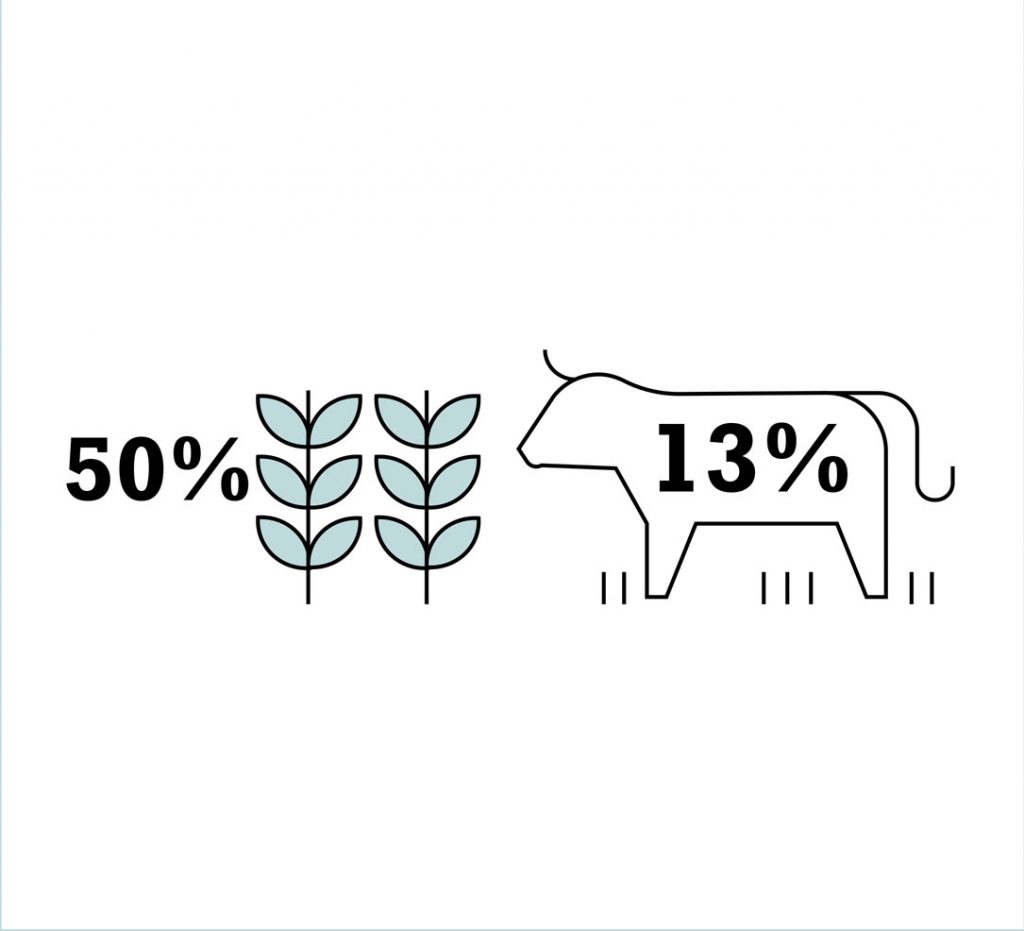
The problem is that, increasingly, we don’t actually eat the food we grow. Some is converted into bio-fuels – and rising oil prices makes that more profitable – but even more is used to fatten up the animals so many of us eat.

There has been a huge increase in meat consumption around the world in recent years. That trend should be a cause for celebration because it reflects that fact that people in developing countries are getting significantly richer. One of the first things people do when their income rises is to buy themselves some meat.

The problem is, these trends – coupled with population growth (which I will be discussing next week) – mean there is unprecedented pressure on food supplies.

The FAO estimates that by 2050 the amount of food available in developing countries will need to double – which is the equivalent of a 70% increase in food production.

We would need a lot less if people stopped eating meat because it would require so much less land.

It is yet another powerful argument for changing our diet. So the question is: how can we get people to change what they eat?

We can try persuasion, working through some of the arguments, as I have here. But don’t underestimate how difficult it is to change people’s behaviour on this.

If you want a measure of just how tough a problem this is to crack, look no further than me.

I know the arguments pretty well (I hope you will agree) and I’ve experienced the health benefits first hand. But I will still be sitting down to a turkey dinner come Christmas.

So perhaps some gentle coercion might therefore be more effective. There is already a lobby for “fat taxes” – higher taxes on fattening foods. It is a short step from there to taxing foods that have an adverse impact on the environment.

But would any politicians have the courage to impose a tax on meat? They are reluctant enough to impose taxes on other, more directly polluting, behaviours.

There may be other ways – please use the comment box below to send in any ideas you have – but, in the meantime, I have two suggestions for determined meat eaters who want to reduce the environmental impact of their food.

First off, eat less meat – that’s something my family is doing (though not this Friday).

The second is even more straightforward, actually eat the stuff you buy!

In developed countries a quarter of all the food that is produced goes uneaten, most of it no doubt growing mould at the bottom of all our fridges.

So here’s a festive challenge: I want you to craft that limp carrot, half-eaten packet of cheese and the remains last night’s pizza into a delicious Christmas spread. It has to be possible to rustle up something palatable… doesn’t it?

Source: Think before you carve – BBC UK

Date: 20 December 2009

12
Results 11-19 of overall 19
REPORTS see all

Livestock Production and Shorter-Lived Climate Forcers

Download

Plant-Based Diets - A solution to our public health crisis

Download

Leaders Preserving Our Future - Insights Paper - WPF - November 2010

Download

Maintaining a Climate of Life - Summary Report

Download

Livestock's Climate Impact

Download

Livestock & Sustainable Food

Download

Reducing Shorter-Lived Climate Forcers Through Dietary Change

Download

The global cost of biodiversity loss: 14 trillion Euros? - EU Commission (2008)

Download

Forests, Fisheries, Agriculture: A Vision for Sustainability (2009)

Download

Global Biodiversity Outlook 3 - United Nations (2010)

Download

  • LATEST NEWS

  • Categories